



Esmatullah “Shagiwal”
Afghanistan and Uzbekistan have historically maintained a structurally resilient and mutually reinforcing trade architecture, primarily anchored in geographic contiguity and convergent macroeconomic interests. In recent years, bilateral trade flows have exhibited significant upward momentum, emerging as a key vector of regional economic integration and cross-border value-chain alignment. These interactions transcend conventional commodity exchange, functioning instead as a broader mechanism for enhancing transit interoperability, stimulating foreign direct investment inflows, and deepening institutionalized regional cooperation frameworks. Accordingly, Afghanistan–Uzbekistan commercial linkages carry macroeconomic and geostrategic importance for both states.
Situated at the strategic nexus of Central and South Asia, Afghanistan operates as a critical transit and logistics corridor, whereas Uzbekistan functions as a pivotal industrial and energy-oriented economy within the Central Asian region. This complementary geo-economic configuration has substantially elevated the strategic utility of bilateral trade engagement. Over the past quinquennium, trade linkages have expanded at an accelerated and structurally consistent rate, unlocking diversified opportunities for both states.
Trade, also known as commerce, refers to the exchange of goods and the provision of services among individuals and nations. It has historically formed a key foundation for the development and progress of societies. Countries engage in trade with one another to fulfill their economic and essential needs; therefore, trade is regarded as a vital pillar of the economy.
Exports play an important role in increasing national revenue and strengthening the overall economy, while imports help meet domestic demands and contribute to improving the living standards of the population.
According to data from the Ministry of Industry and Commerce, the trade volume between Afghanistan and Uzbekistan reached approximately 989 million dollars in 2025, of which 129 million dollars accounted for exports and 860 million dollars for imports.
The ministry’s spokesperson stated that Afghanistan’s export products include non-alcoholic beverages, agricultural product, potatoes, raisins, asafoetida, asafoetida seeds, and carpets. On the other hand, imports from Uzbekistan mainly consist of flour, wheat, petroleum, chemical fertilizers, liquefied natural gas, and various industrial raw materials.
According to a report by the National Statistics Committee of Uzbekistan, published through Trend News Agency, the trade volume between Afghanistan and Uzbekistan reached 298.4 million dollars during the first two months of 2026 (January and February). This represents a notable increase of 8.21% compared to 2025, 45.5% compared to 2024, and 84.4% compared to 2023, reflecting significant growth in bilateral trade activity.
Economic analysts consider the expansion of trade relations with Central Asian countries, particularly Uzbekistan, an important development for Afghanistan. They note that it not only enhances the diversification of trade routes but also helps reduce reliance on a limited number of transit corridors.
Furthermore, a report from the Ministry of Public Health indicates that three commercial agreements, valued at over 25 million dollars, have been signed between pharmaceutical traders of the two countries. This development is viewed as a key milestone in strengthening economic cooperation in the health and pharmaceutical sectors.
Overall, trade relations between Afghanistan and Uzbekistan have experienced rapid growth over the past quinquennium. These expanding ties are contributing not only to the economic strengthening of both countries but also to broader regional stability and development.
Looking ahead, further expansion of economic cooperation is expected, with projections indicating continued growth in bilateral trade volumes in the coming years.
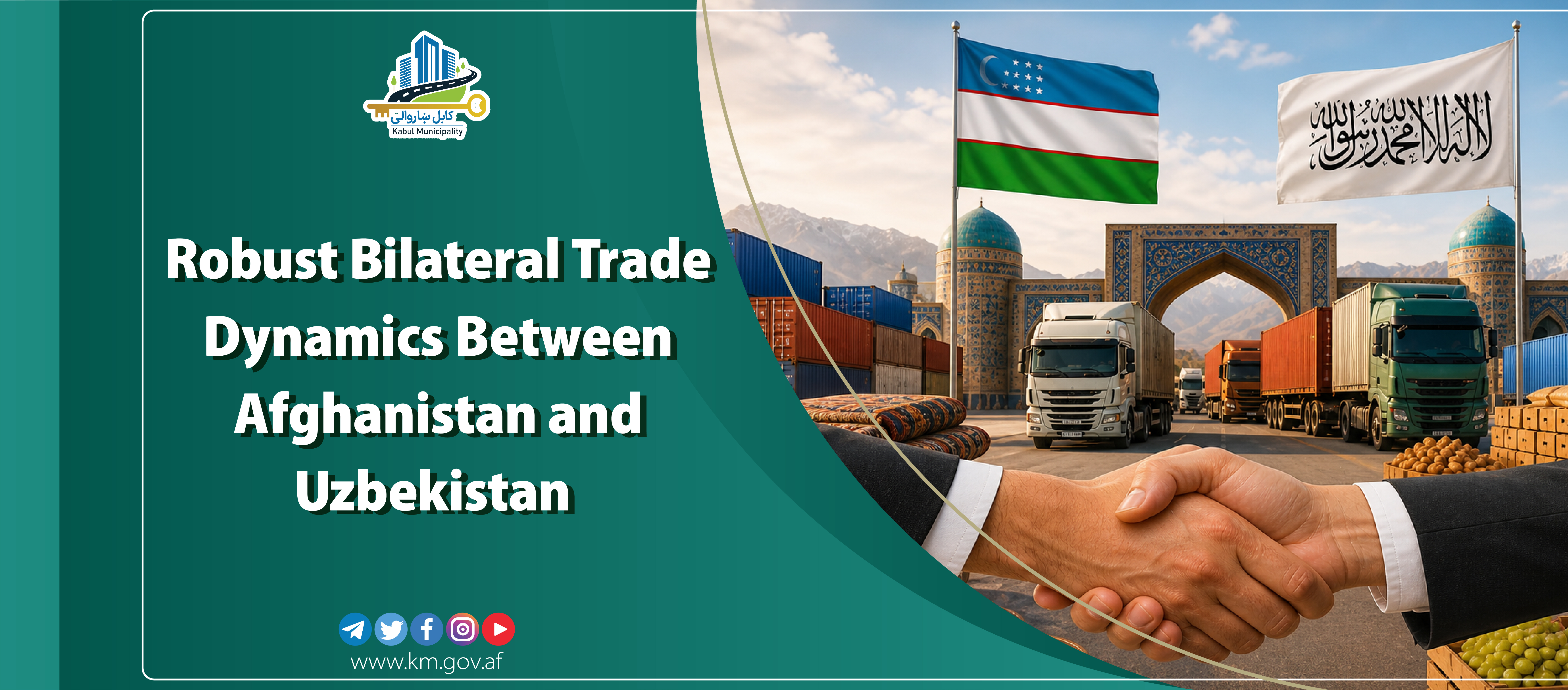
Robust Bilateral Trade Dynamics Between Afghanistan and Uzbekistan