


 TAPI is an acronym created from the first letters of Turkmenistan, Afghanistan, Pakistan, and India. These states participate in the project and gain benefits from it. Under this initiative, gas from Turkmenistan is transported through Afghanistan to Pakistan and then onward to India.
The pipeline is designed to carry 33 billion cubic meters of Turkmenistan’s gas each year through Afghanistan to Pakistan and subsequently to India. The TAPI gas pipeline begins in Turkmenistan’s Galkynysh region, passes through Herat and Kandahar in Afghanistan, and reaches Quetta in occupied Afghanistan; after crossing occupied Multan, it arrives at its final main terminal in Fazilka, India. The overall length of the TAPI project from Galkynysh to Fazilka is 1,814 kilometers, with 816 kilometers running through Afghanistan.
Afghanistan is one of the transit countries in this project and holds strategic significance. The primary benefit for Afghanistan is the transit income generated by the gas pipeline, from which the country will earn 400 million dollars each year. This revenue will support infrastructure development and help improve the national economic condition. In addition, the TAPI project can enhance Afghanistan’s domestic energy situation. Through this pipeline, Afghanistan can keep a share of the transported gas for internal use, contributing to sustainable energy supply and reducing dependence on external sources.
A key advantage of the TAPI project is the income derived from gas revenues. The project not only contributes to the establishment and strengthening of economic and industrial infrastructure, but it will also generate thousands of direct and indirect employment opportunities across different economic sectors. Furthermore, supplying gas to certain regions of Afghanistan improves access to sustainable energy and lowers reliance on foreign resources.
As a vital economic artery, this pipeline can promote industrial growth and reinforce Afghanistan’s domestic and international trade. By facilitating the transfer of gas from Turkmenistan toward South Asia, Afghanistan is becoming a major economic center, raising its regional role and standing.
From a security standpoint, the TAPI project is viewed as both an opportunity and an advantage for the Islamic Emirate, since by ensuring a strong and stable security environment in Afghanistan, the Islamic Emirate has enabled the launch of such large-scale projects. This encourages greater regional economic cooperation, which ultimately leads to economic progress and the creation of employment opportunities for citizens.
Recognizing this strategic opportunity, the Islamic Emirate of Afghanistan has exerted significant efforts to launch and safeguard this important project, as the presence of security allows the implementation of major initiatives that build strong and lasting economic ties between Afghanistan and other countries.
Following the rise of the Islamic Emirate to power, practical work on the TAPI project commenced on 2024/9/11. Through diplomatic engagement and by guaranteeing full security, the Islamic Emirate coordinated with officials from Turkmenistan and other participating countries, which has supported the advancement of the project.
Up to now, 15 kilometers of the gas pipeline have been laid within Afghanistan, and an additional 91 kilometers of land have been prepared for further extension of the pipeline.
Meanwhile, the TAPI project is not only significant for the participating countries but can also produce positive effects at the global level. Given the steadily growing energy demands of India and Pakistan, this pipeline can ensure a reliable energy supply for these nations. Turkmenistan, possessing extensive gas reserves, can access new export markets through this project. Internationally, TAPI can be regarded as a successful model of economic cooperation between the Islamic Emirate and the region, strengthening the economies of member states and creating opportunities for both domestic and foreign investors in Afghanistan.
With the completion and operation of the TAPI project, the Islamic Emirate can assume an important role in meeting regional and global energy needs and can utilize gas revenues as a major resource for Afghanistan’s economic growth. This project reflects the Islamic Emirate’s ongoing efforts toward building a prosperous and stable Afghanistan.
TAPI is an acronym created from the first letters of Turkmenistan, Afghanistan, Pakistan, and India. These states participate in the project and gain benefits from it. Under this initiative, gas from Turkmenistan is transported through Afghanistan to Pakistan and then onward to India.
The pipeline is designed to carry 33 billion cubic meters of Turkmenistan’s gas each year through Afghanistan to Pakistan and subsequently to India. The TAPI gas pipeline begins in Turkmenistan’s Galkynysh region, passes through Herat and Kandahar in Afghanistan, and reaches Quetta in occupied Afghanistan; after crossing occupied Multan, it arrives at its final main terminal in Fazilka, India. The overall length of the TAPI project from Galkynysh to Fazilka is 1,814 kilometers, with 816 kilometers running through Afghanistan.
Afghanistan is one of the transit countries in this project and holds strategic significance. The primary benefit for Afghanistan is the transit income generated by the gas pipeline, from which the country will earn 400 million dollars each year. This revenue will support infrastructure development and help improve the national economic condition. In addition, the TAPI project can enhance Afghanistan’s domestic energy situation. Through this pipeline, Afghanistan can keep a share of the transported gas for internal use, contributing to sustainable energy supply and reducing dependence on external sources.
A key advantage of the TAPI project is the income derived from gas revenues. The project not only contributes to the establishment and strengthening of economic and industrial infrastructure, but it will also generate thousands of direct and indirect employment opportunities across different economic sectors. Furthermore, supplying gas to certain regions of Afghanistan improves access to sustainable energy and lowers reliance on foreign resources.
As a vital economic artery, this pipeline can promote industrial growth and reinforce Afghanistan’s domestic and international trade. By facilitating the transfer of gas from Turkmenistan toward South Asia, Afghanistan is becoming a major economic center, raising its regional role and standing.
From a security standpoint, the TAPI project is viewed as both an opportunity and an advantage for the Islamic Emirate, since by ensuring a strong and stable security environment in Afghanistan, the Islamic Emirate has enabled the launch of such large-scale projects. This encourages greater regional economic cooperation, which ultimately leads to economic progress and the creation of employment opportunities for citizens.
Recognizing this strategic opportunity, the Islamic Emirate of Afghanistan has exerted significant efforts to launch and safeguard this important project, as the presence of security allows the implementation of major initiatives that build strong and lasting economic ties between Afghanistan and other countries.
Following the rise of the Islamic Emirate to power, practical work on the TAPI project commenced on 2024/9/11. Through diplomatic engagement and by guaranteeing full security, the Islamic Emirate coordinated with officials from Turkmenistan and other participating countries, which has supported the advancement of the project.
Up to now, 15 kilometers of the gas pipeline have been laid within Afghanistan, and an additional 91 kilometers of land have been prepared for further extension of the pipeline.
Meanwhile, the TAPI project is not only significant for the participating countries but can also produce positive effects at the global level. Given the steadily growing energy demands of India and Pakistan, this pipeline can ensure a reliable energy supply for these nations. Turkmenistan, possessing extensive gas reserves, can access new export markets through this project. Internationally, TAPI can be regarded as a successful model of economic cooperation between the Islamic Emirate and the region, strengthening the economies of member states and creating opportunities for both domestic and foreign investors in Afghanistan.
With the completion and operation of the TAPI project, the Islamic Emirate can assume an important role in meeting regional and global energy needs and can utilize gas revenues as a major resource for Afghanistan’s economic growth. This project reflects the Islamic Emirate’s ongoing efforts toward building a prosperous and stable Afghanistan.
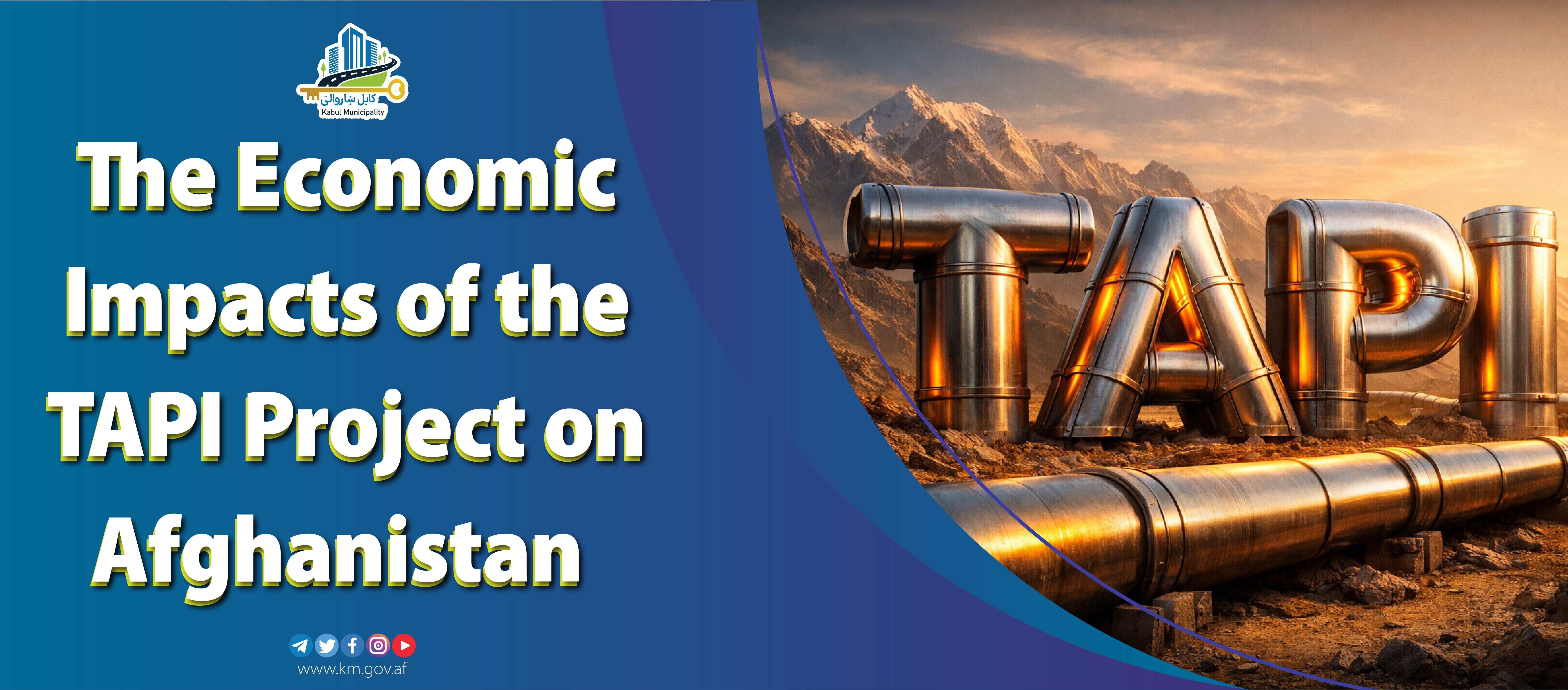
The Economic Impacts of the TAPI Project on Afghanistan
International Relations Expert M. Ismail. Shahin
TAPI is an acronym created from the first letters of Turkmenistan, Afghanistan, Pakistan, and India. These states participate in the project and gain benefits from it. Under this initiative, gas from Turkmenistan is transported through Afghanistan to Pakistan and then onward to India.
The pipeline is designed to carry 33 billion cubic meters of Turkmenistan’s gas each year through Afghanistan to Pakistan and subsequently to India. The TAPI gas pipeline begins in Turkmenistan’s Galkynysh region, passes through Herat and Kandahar in Afghanistan, and reaches Quetta in occupied Afghanistan; after crossing occupied Multan, it arrives at its final main terminal in Fazilka, India. The overall length of the TAPI project from Galkynysh to Fazilka is 1,814 kilometers, with 816 kilometers running through Afghanistan.
Afghanistan is one of the transit countries in this project and holds strategic significance. The primary benefit for Afghanistan is the transit income generated by the gas pipeline, from which the country will earn 400 million dollars each year. This revenue will support infrastructure development and help improve the national economic condition. In addition, the TAPI project can enhance Afghanistan’s domestic energy situation. Through this pipeline, Afghanistan can keep a share of the transported gas for internal use, contributing to sustainable energy supply and reducing dependence on external sources.
A key advantage of the TAPI project is the income derived from gas revenues. The project not only contributes to the establishment and strengthening of economic and industrial infrastructure, but it will also generate thousands of direct and indirect employment opportunities across different economic sectors. Furthermore, supplying gas to certain regions of Afghanistan improves access to sustainable energy and lowers reliance on foreign resources.
As a vital economic artery, this pipeline can promote industrial growth and reinforce Afghanistan’s domestic and international trade. By facilitating the transfer of gas from Turkmenistan toward South Asia, Afghanistan is becoming a major economic center, raising its regional role and standing.
From a security standpoint, the TAPI project is viewed as both an opportunity and an advantage for the Islamic Emirate, since by ensuring a strong and stable security environment in Afghanistan, the Islamic Emirate has enabled the launch of such large-scale projects. This encourages greater regional economic cooperation, which ultimately leads to economic progress and the creation of employment opportunities for citizens.
Recognizing this strategic opportunity, the Islamic Emirate of Afghanistan has exerted significant efforts to launch and safeguard this important project, as the presence of security allows the implementation of major initiatives that build strong and lasting economic ties between Afghanistan and other countries.
Following the rise of the Islamic Emirate to power, practical work on the TAPI project commenced on 2024/9/11. Through diplomatic engagement and by guaranteeing full security, the Islamic Emirate coordinated with officials from Turkmenistan and other participating countries, which has supported the advancement of the project.
Up to now, 15 kilometers of the gas pipeline have been laid within Afghanistan, and an additional 91 kilometers of land have been prepared for further extension of the pipeline.
Meanwhile, the TAPI project is not only significant for the participating countries but can also produce positive effects at the global level. Given the steadily growing energy demands of India and Pakistan, this pipeline can ensure a reliable energy supply for these nations. Turkmenistan, possessing extensive gas reserves, can access new export markets through this project. Internationally, TAPI can be regarded as a successful model of economic cooperation between the Islamic Emirate and the region, strengthening the economies of member states and creating opportunities for both domestic and foreign investors in Afghanistan.
With the completion and operation of the TAPI project, the Islamic Emirate can assume an important role in meeting regional and global energy needs and can utilize gas revenues as a major resource for Afghanistan’s economic growth. This project reflects the Islamic Emirate’s ongoing efforts toward building a prosperous and stable Afghanistan.
TAPI is an acronym created from the first letters of Turkmenistan, Afghanistan, Pakistan, and India. These states participate in the project and gain benefits from it. Under this initiative, gas from Turkmenistan is transported through Afghanistan to Pakistan and then onward to India.
The pipeline is designed to carry 33 billion cubic meters of Turkmenistan’s gas each year through Afghanistan to Pakistan and subsequently to India. The TAPI gas pipeline begins in Turkmenistan’s Galkynysh region, passes through Herat and Kandahar in Afghanistan, and reaches Quetta in occupied Afghanistan; after crossing occupied Multan, it arrives at its final main terminal in Fazilka, India. The overall length of the TAPI project from Galkynysh to Fazilka is 1,814 kilometers, with 816 kilometers running through Afghanistan.
Afghanistan is one of the transit countries in this project and holds strategic significance. The primary benefit for Afghanistan is the transit income generated by the gas pipeline, from which the country will earn 400 million dollars each year. This revenue will support infrastructure development and help improve the national economic condition. In addition, the TAPI project can enhance Afghanistan’s domestic energy situation. Through this pipeline, Afghanistan can keep a share of the transported gas for internal use, contributing to sustainable energy supply and reducing dependence on external sources.
A key advantage of the TAPI project is the income derived from gas revenues. The project not only contributes to the establishment and strengthening of economic and industrial infrastructure, but it will also generate thousands of direct and indirect employment opportunities across different economic sectors. Furthermore, supplying gas to certain regions of Afghanistan improves access to sustainable energy and lowers reliance on foreign resources.
As a vital economic artery, this pipeline can promote industrial growth and reinforce Afghanistan’s domestic and international trade. By facilitating the transfer of gas from Turkmenistan toward South Asia, Afghanistan is becoming a major economic center, raising its regional role and standing.
From a security standpoint, the TAPI project is viewed as both an opportunity and an advantage for the Islamic Emirate, since by ensuring a strong and stable security environment in Afghanistan, the Islamic Emirate has enabled the launch of such large-scale projects. This encourages greater regional economic cooperation, which ultimately leads to economic progress and the creation of employment opportunities for citizens.
Recognizing this strategic opportunity, the Islamic Emirate of Afghanistan has exerted significant efforts to launch and safeguard this important project, as the presence of security allows the implementation of major initiatives that build strong and lasting economic ties between Afghanistan and other countries.
Following the rise of the Islamic Emirate to power, practical work on the TAPI project commenced on 2024/9/11. Through diplomatic engagement and by guaranteeing full security, the Islamic Emirate coordinated with officials from Turkmenistan and other participating countries, which has supported the advancement of the project.
Up to now, 15 kilometers of the gas pipeline have been laid within Afghanistan, and an additional 91 kilometers of land have been prepared for further extension of the pipeline.
Meanwhile, the TAPI project is not only significant for the participating countries but can also produce positive effects at the global level. Given the steadily growing energy demands of India and Pakistan, this pipeline can ensure a reliable energy supply for these nations. Turkmenistan, possessing extensive gas reserves, can access new export markets through this project. Internationally, TAPI can be regarded as a successful model of economic cooperation between the Islamic Emirate and the region, strengthening the economies of member states and creating opportunities for both domestic and foreign investors in Afghanistan.
With the completion and operation of the TAPI project, the Islamic Emirate can assume an important role in meeting regional and global energy needs and can utilize gas revenues as a major resource for Afghanistan’s economic growth. This project reflects the Islamic Emirate’s ongoing efforts toward building a prosperous and stable Afghanistan.